
 IB Docs (2) Team

7. The Conquest of Cyprus
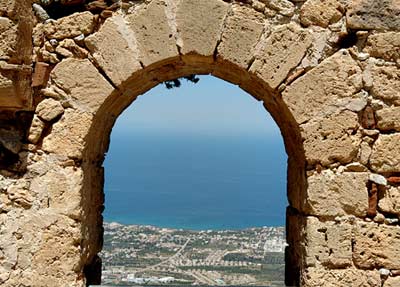
Kyrenia Castle - Sadik Pasha's resting place
Richard invaded Cyprus on his way to liberate Jerusalem during the Third Crusade. A number of sources from varied origins, different contexts and ideological backgrounds do recount the events related to the Cyprus expedition and there are first hand eyewitness accounts as well as contemporaries that describe the events.
In this section, the major causes, effects and wider implications of Richard's conquest of Cyprus will be outlined from a variety of historical sources followed by activities to assess your learning and understanding.
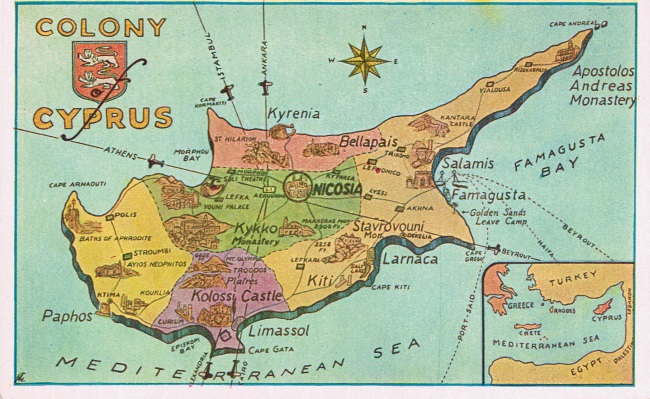
[Coloured Map of Cyprus / Courtesy of www.Cyprusscene.com Dated to the 1960s]
7.1. Key events
Richard's fleet of ships veered off course from its journey to Jerusalem and after a short transit in Rhodes due to strong gales it crashed on the Cypriot shores.
Next to arrive was a ship with Richard's sister Joanna and his fiance Berengaria of Navarre and were met with hostility by Isaac.
On 5 May 1191, Richard's ship with his storm-tossed fleet arrived joining Joanna and Berengaria.
He learned that Isaac tried to take his sister and fiance hostage and sought reprisals. He set sail for the port of Limassol.
Richard entered Limassol and defeated a small resistance planted by Isaac.
on May 12, Richard solemnised his marriage to Berengaria.
Isaac as a truce gesture agreed to join Richard's efforts to reach Palestine and serve him. However, Isaac reneged on that agreement.
Richard used this act as a pretext to subjugate the whole island and by the end of May, having circumnavigated the island, it was realised with Isaac finally captured and held prisoner on June 1 1191.
on 5 June 1191, Richard left Cyprus and sailed for Palestine.
Summarised from Edbury, The Kingdom of Cyprus and the Crusades, 1191-1374, pp.6-10.
In The Historical Dictionary of Cyprus, ed. F. Mirbagheri (Plymouth: Scarecrow Press, 2010), s.v. "Richard the Lionheart", p.151 it has:
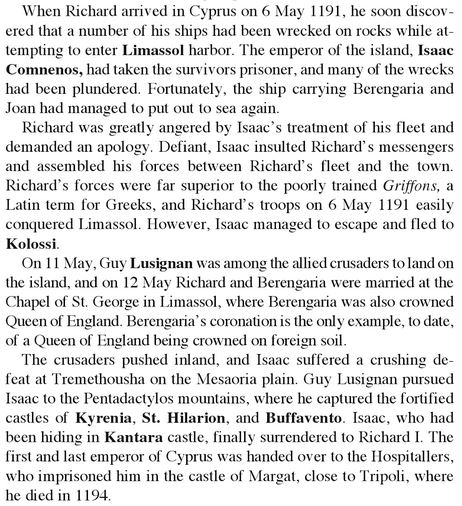
In The Crusades (London: Simon & Schuster, 2101) by Thomas Asbridge, it has:
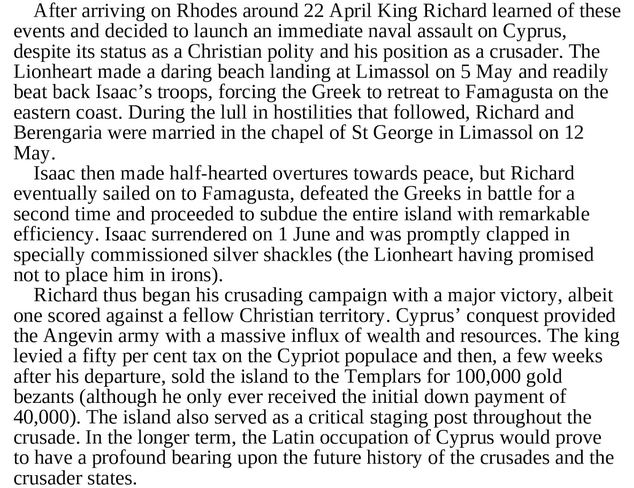
7.2. Context
Limassol was the port where Richard alighted when he reached Cyprus. The sources appear to suggest that the population of Limassol was under full submission to Isaac, indicated by the complete dissatisfaction of the ruling class (archontes) towards him. The people were therefore ready to change their allegiances.
On brief references to Isaac online, see:
1. "Isaac Comnenos, Emperor of Cyprus" here.
2. "Isaac Comnenus of Cyprus" here.
3. "Isaac I Comnenus" here.
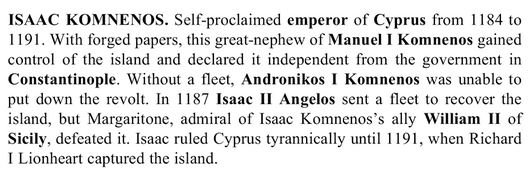
Below, entry on Isaac in Historical Dictionary of Byzantium, by J. Rosser (Plymouth: Scarecrow Press, 2012), p.250:
The historical sources overwhelmingly portray Isaac as a deranged self-imposed ruler:
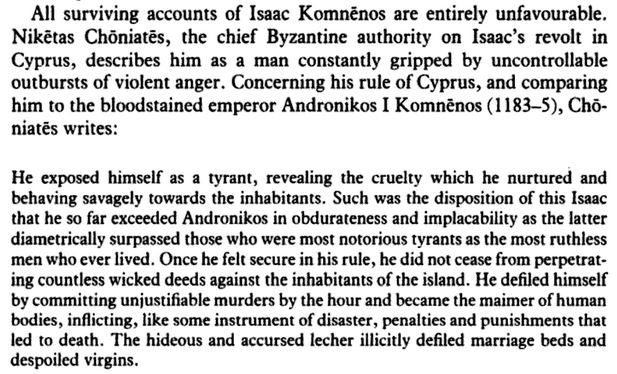
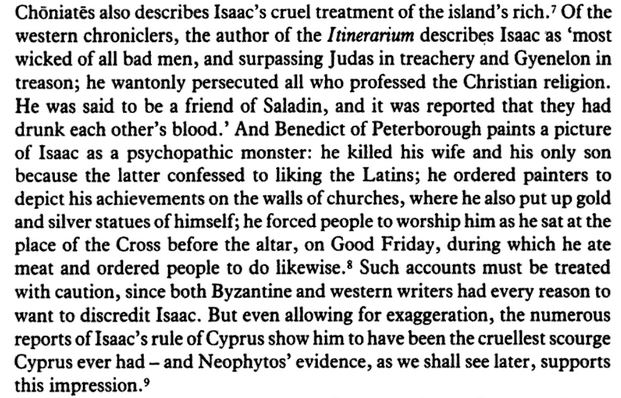
Galatariotou, The Making of a Saint: The Life, Times and Sanctification of Neophytos The Recluse (Cambridge: Cambridge University Press, 1991), pp.42-43.
7.3. Causes
Read the following extract from Epistolae Cantuarienses ('Canterbury Letters') by Richard I:
... as we were continuing our pilgrimage journey, we were diverted to Cyprus where we hoped to find the refuge of those of our number who had been shipwrecked. But the tyrant [Isaac Comnenus] ... hurriedly brought a strongly armed force to bar us from the port. He robbed and despoiled as many as possible of our men who suffered wreck and imprisoned those dying of hunger.
From: Chronicles and Memorials of the Reign of Richard I, v.2, Epistolae Cantuarienses, ed. William Stubbs in series Regnum Britannicarum Medii Aevi Scriptores, Chronicles and Memorials of Great Britain and Ireland during the Middle Ages (London: Longman, Green, 1865), p.347.
The source suggests that the excursion into Cyprus was not intentional but accidental or unintended.
The following poem is by the Norman poet and chronicler of the Third Crusade Ambroise:
The King, by taking Cyprus, had
made all the army to be glad;
for therefrom would they food derive
to keep the mighty host alive.
Tr. from Richard I by Gillingham, p.153.
It suggests Richard intended to sail to Cyprus in order to capture it to use it as a source of supplies for those Crusaders on the Syrian coastal towns.
7.4. Effects
An extract from Epistolae Cantuarienses ('Canterbury Letters') by Richard I.
We did battle with our enemy, and thanks to divine assistance, obtained a speedy victory. Defeated and fettered, we hold him [Isaac Comnenus] together with his only daughter. We have subjected to ourselves the whole island of Cyprus with all its strong points.
Chronicles and Memorials of the Reign of Richard I, v.2, Epistolae Cantuarienses, p.347.
Some of the effects on the Conquest of Cyprus's include:
European power: Cyprus came under European (English) rule for the first time and thus fell within the wider Western European expansionism in the Mediterranean and Middle East.
Richard I introduced the Latin Church into Cyprus: i.e. the Church that followed Rome (Catholicism) whereas Cyprus had always been under the Greek Orthodox Church as part of the larger Byzantine empire.
Cyprus was returned: Richard I was aiming for Jerusalem (the Holy Land) to get restore it under Christian control and so he felt Cyprus was not really worth the trouble of ruling. He thus sold it to the Knights Templar for 100,000 bezants. However, it is reported that had to take it back from them afterwards because the local Cypriot population disliked the Knights Templar who were harsh rulers and revolted against them in 1192.
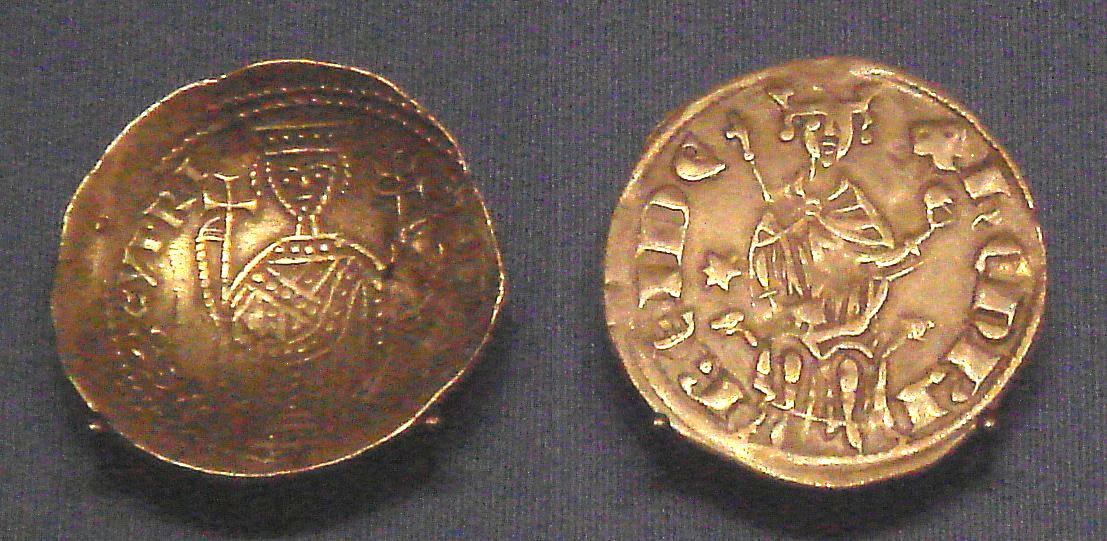
[Cypriot gold bezant circa 13th century (left) and silver gros circa 13th century (right). British Museum collection / courtesy of wikipedia].
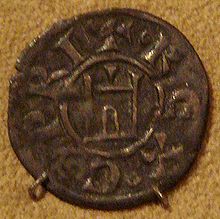
[A coin from the Kingdom of Cyprus, circa 13th . British Museum collection / courtesy of wikipedia].
Marginalisation of the Greek Orthodox Christians: Roman Catholics kept the reins of power and control, while the Orthodox inhabitants lived largely in the countryside and rural areas. The independent Eastern Orthodox Church of Cyprus, with its own archbishop and subject to no patriarch, was allowed to remain on the island, but the Latin Church largely displaced it in stature and holding property.
Gifting Cyprus: Richard I offered his friend Guy de Lusignan the kingdom of Cyprus. This allowed Guy the opportunity to save face and keep some sort of power in the East whilst at the same time Richard could get rid of a troublesome Island. This marked the beginning of over three centuries of Latin rule on the Island (it ended in 1571 when the Ottomans took it). It is unclear whether Richard gave Guy Cyprus as a gift or whether he sold it to him and it is highly unlikely that Richard was ever paid even if a deal was struck. In 1194, Guy de Lusignan died without any heirs and so his older brother, Amalric, became King Amalric I of Cyprus, a crown and title which was approved by Henry VI, the Holy Roman Emperor.
Feudal System: Richard also bought the Norman Feudal System into Cyprus to control the Island. This had wider effects on the social make-up on the Island through new hierarchies and power structures.
A group discussion on Richard's conquest of Cyprus:
7.5. ATL Activities
ATL Skills: Research
Richard In Cyprus
Research the events of Richard in Cyprus.
Then create a timeline of five events/actions you think were key.
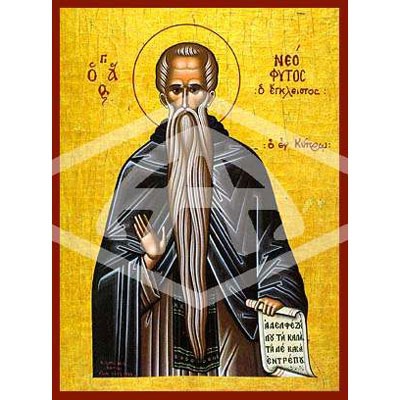
[Hermit of the Mountain, Neophytos the Recluse.]
"he destroyed the land ... hassled the lives of the rich... and all men lived in misery..."
Reported by Neophytos the recluse a contemporary Cypriot eyewitness, De calamitatibus Cypri, 1p.12: ἐκάκωσε δὲ οὐ την χώραν ἁπλῶς καί τῶν πλουσίων τοὺς βίους καθόλου διήρπασεν ... ὥστε πάντας ἐν ἀμιχανίᾳ διάγειν.
Question:
What do you think this statement of Neophytos means about Isaac Comnenos in light of the political context of Cyprus already mentioned above?
"And all the people [Cypriots] ran to him [i.e. Richard]..."
Reported by Neophytos the recluse a contemporary Cypriot eyewitness, De calamitatibus Cypri, p.12: θάττον έδραμον πάντες έρημος εναπομείνας λαού.
Question:
What do you think this statement of Neophytos indicates in light of the political and economic context of Cyprus already mentioned?
"And the Englishman [...] ruined the land..."
Described by Neophytos the recluse a contemporary Cypriot eyewitness, De calamitatibus Cypri, p.12: Ἰγκλίτερ [...] τὴν χώραν σχυλεύσαζ δεινῶς'.
Question:
What do you think this statement of Neophytos suggests about the effect of Richard on the Island?
In your own words, outline the causes for Richard conquering Cyprus.
In your own words, outline the effects of Richard conquering Cyprus.
Read the account of the conquest of Cyprus by Benedict of Peterborough and Neophytos the Cloistered Monk here.
Complete a grid containing the following: origins, purpose, value and limitations for each source.
See as well N. Coureas, "The Conquest of Cyprus during the Third Crusade according to Greek Chronicles from Cyprus" in The Medieval Chronicles VIII (Amsterdam: Rodopi, 2013), pp.193-204.
Read the source below from Aytoun's book The Life and Time of Richard First: Surnamed Coeur-de-Lion (London: W. Tegg, 1840), p.95:
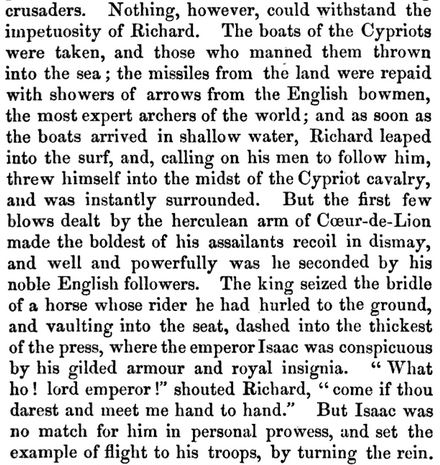
Questions:
1. State one thing we learn from the source?
2. Outline how this source depicts Richard?
3. Explain one limitation of this source.
 Twitter
 Facebook
 LinkedIn